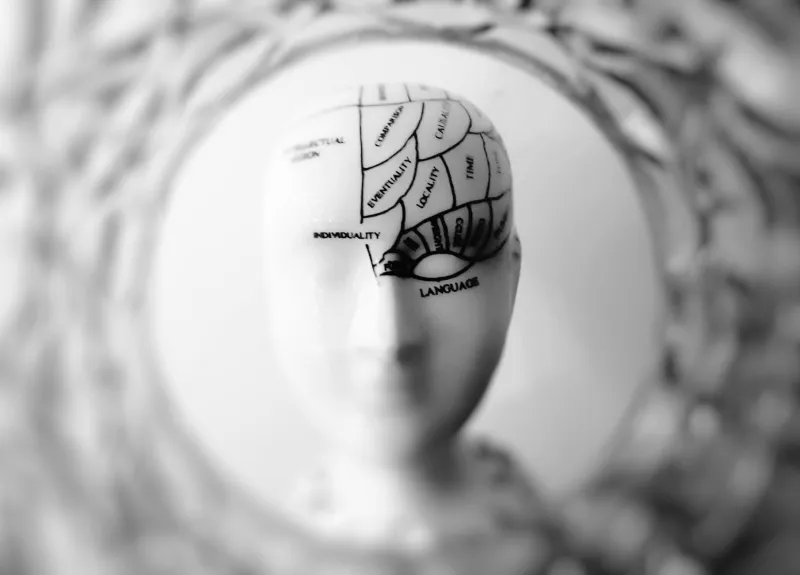
That Gut Feeling of 'I've Got This'? It's Not What You Think It Is

There's a particular feeling most of us recognize immediately. You're in a meeting, a classroom, or a heated family dinner, and someone asks a question. Before you've even consciously processed it, something in your brain whispers: I know this. It's warm. It's solid. It feels like bedrock.
The problem? That feeling is generated by a part of your brain that has absolutely no access to whether you're actually right.
This isn't a minor quirk. It's one of the most consequential design features — or bugs, depending on your perspective — of human cognition. And understanding it might be the single most useful thing you do this year.
The Feeling of Knowing Is Not the Same as Knowing
Neurologist Robert Burton spent years studying what he called the "feeling of knowing" — that subjective sense of certainty that accompanies a belief. His conclusion, laid out in his book On Being Certain, is genuinely unsettling: the sensation of certainty is an emotional state, not an intellectual judgment.
In other words, your brain has a dedicated system for generating the feeling that something is true. That system does not check its work against reality before firing. It runs on pattern recognition, familiarity, emotional resonance, and repetition — not accuracy.
This is why misinformation that gets repeated often enough starts to feel true. It's why you can be absolutely convinced you left your keys on the counter when they're in your jacket pocket. And it's why medical professionals, judges, financial advisors, and teachers — people with genuine expertise — can be catastrophically, confidently wrong.
When Metacognition Lets You Down
Metacognition is the fancy term for thinking about your own thinking. In theory, it's your brain's quality-control department — the internal auditor that checks whether your reasoning is sound. In practice, it's more like an auditor who mostly just agrees with whatever the CEO already decided.
Research on metacognitive accuracy consistently shows that people are not great at knowing what they don't know. In educational settings, students routinely overestimate their performance on tests they just took. In medicine, studies of diagnostic confidence show that physicians are often just as confident when they're wrong as when they're right. One landmark analysis of autopsies found that in cases where doctors had expressed "complete certainty" about a diagnosis, they were wrong roughly 40% of the time.
Let that sink in. Complete certainty. Wrong 40% of the time.
The issue isn't that these people are bad at their jobs. It's that the metacognitive signal — the internal gauge that's supposed to tell you how sure to be — is noisy and unreliable in ways we almost never account for.
The Fluency Illusion: When Easy Feels Like True
One of the sneakiest contributors to false certainty is something psychologists call the fluency illusion. When information is easy to process — because it's simply stated, familiar, or matches what you already believe — your brain codes that ease as a signal of truth and understanding.
This is part of why complex misinformation, paradoxically, can feel less trustworthy than simple misinformation. A slick, easy-to-share social media post that confirms your existing view will feel more "right" than a dense, nuanced scientific paper that complicates it — even if the paper is correct and the post is nonsense.
It also explains something teachers see constantly: students who read through their notes the night before an exam feel prepared, because the material feels familiar and easy to process. But recognition isn't recall. Feeling like you know something in a low-pressure moment is completely different from being able to retrieve and apply it under pressure. The fluency illusion mistakes one for the other every single time.
Real-World Consequences: It's Not Just a Trivia Problem
You might be thinking: okay, so I'm overconfident sometimes. Who isn't? But the stakes here go well beyond getting a bar trivia question wrong.
In everyday decision-making, false certainty is the reason people skip second opinions. It's why eyewitness testimony — which feels incredibly certain to the witness — is one of the leading contributors to wrongful convictions in the US. It's why investors hold losing positions too long, because they're certain they understand the market. It's why people reject new information that contradicts what they feel they already know, not because they've evaluated it, but because the feeling of knowing is uncomfortable to give up.
The certainty trap isn't a personality flaw. It's a structural feature of how human brains process information. Which means the solution isn't to simply "try harder" to be humble. You need actual tools.
Calibrating Confidence: Practical Moves That Actually Help
The goal isn't to become a paralyzed ball of self-doubt. It's to develop what researchers call calibrated confidence — being roughly as sure as the evidence actually warrants. Here's what works:
Rate your confidence explicitly, before you check. Before looking something up, before getting a result back, before making a decision — pause and put a number on it. How confident are you, on a scale of 1 to 10? This simple act forces your metacognitive system to produce an estimate rather than just a vague feeling. Over time, tracking these estimates against outcomes builds genuine self-awareness about where your certainty is trustworthy and where it isn't.
Ask yourself what would change your mind. If you can't name specific evidence that would shift your view, that's a red flag. Genuine understanding produces falsifiable beliefs. Certainty that feels unshakeable regardless of hypothetical counter-evidence is often a sign that the feeling of knowing has decoupled from actual reasoning.
Seek out the best opposing argument, not the worst. It's easy to feel certain when you're only comparing your view to weak counterarguments. The real test is steelmanning — finding the strongest, most reasonable version of the opposing position. If your certainty survives that encounter, it's more trustworthy. If it doesn't, you've just learned something.
Slow down on the easy stuff. Counterintuitively, your calibration should be most careful when something feels obvious. The fluency illusion is strongest on familiar, simple-seeming ideas. When something feels immediately obvious or self-evident, that's actually a good moment to pause and double-check your reasoning rather than coast on the feeling.
Comfortable With Uncertainty Is a Skill, Not a Personality Trait
At SkeptiCamp, we talk a lot about critical thinking as something you practice, not something you either have or don't. The same is true for managing certainty. Sitting comfortably with "I'm not sure" — not as a cop-out, but as an accurate reflection of your actual epistemic state — is genuinely learnable.
It starts with recognizing that the feeling of certainty is data about your emotional state, not a readout of objective truth. Your brain generates it automatically, quickly, and often inaccurately. That's not a personal failing. It's just how the hardware works.
Once you stop treating that warm, solid feeling of I know this as reliable evidence that you do, you've taken the first step toward something much more valuable than false confidence: actual understanding of where you stand.