Half-Baked Knowledge Is the Most Dangerous Kind — Here's Why
There's a specific kind of person we've all encountered. Maybe it's a coworker who took one nutrition class in college and now confidently corrects everyone's lunch choices. Maybe it's a Facebook acquaintance who watched a YouTube video about vaccines and suddenly has opinions that contradict decades of epidemiology. Maybe — and this is the uncomfortable part — it's been you at some point.
This isn't a knock on curiosity. Curiosity is literally what SkeptiCamp is built around. But there's a well-documented psychological phenomenon that turns curiosity into overconfidence, and overconfidence into misinformation. It's called the Dunning-Kruger effect, and understanding it might be one of the most useful mental tools you ever pick up.
What the Dunning-Kruger Effect Actually Says
Back in 1999, psychologists David Dunning and Justin Kruger published a now-famous study showing that people with limited knowledge in a given area tend to dramatically overestimate their own competence. Meanwhile, genuine experts often underestimate themselves — they know enough to understand how much they don't know.
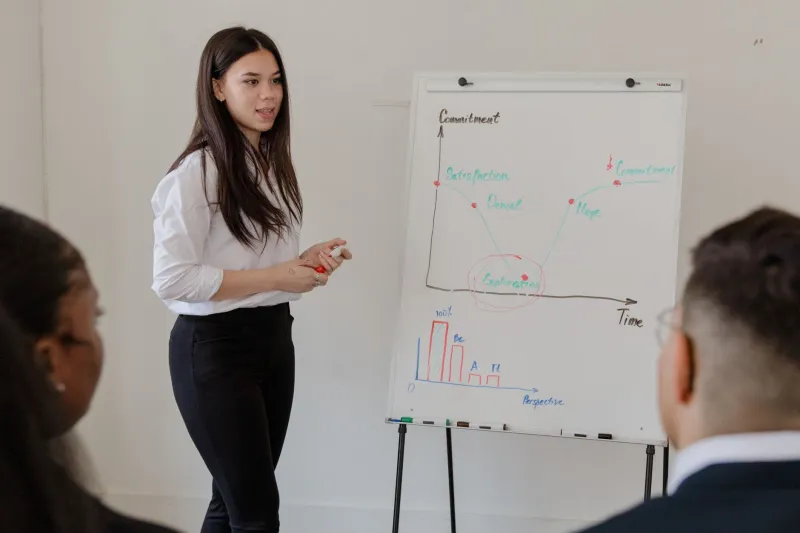
The result is a curve that looks almost like a hill. At the very bottom, when you know essentially nothing, you're at least aware of your ignorance. As you pick up a little information, your confidence rockets upward. Then, as real expertise develops, confidence actually dips — because you start grasping the complexity of the subject. True mastery brings a more calibrated, humble confidence back.
That peak of the hill — where a little knowledge meets maximum confidence — is what researchers sometimes call the "peak of Mount Stupid." It's a funny name for a genuinely serious problem.
Why Social Media Turned the Volume Up
The Dunning-Kruger effect isn't new. What is new is the infrastructure that rewards people sitting at that overconfident peak.
Social media platforms don't just allow people with partial knowledge to share their views — they actively incentivize it. Confident, simple takes get engagement. Nuanced, hedged explanations get scrolled past. A person who half-understands how mRNA vaccines work and declares them "gene therapy" gets thousands of shares. An immunologist explaining the actual mechanism in careful detail gets twelve likes and a comment from their mom.
The result? The loudest voices in online health, nutrition, and science conversations are frequently people who are just educated enough to sound credible, but not educated enough to recognize the limits of their understanding.
Case Studies in Confident Confusion
Nutrition: This is arguably the most fertile ground for Dunning-Kruger misinformation in the US. Someone reads a popular book about sugar being toxic, or stumbles onto research about seed oils, and suddenly they're diagnosing strangers' diets in comment sections. Real nutrition science is extraordinarily complex — it involves biochemistry, epidemiology, individual genetics, and study designs that are notoriously difficult to control. But a person with surface-level exposure doesn't know enough to know that. They have an answer, and it feels solid.
Climate science: The physics of greenhouse gases is well-established. But climate modeling involves atmospheric chemistry, ocean dynamics, feedback loops, and decades of data synthesis. Someone who learned that CO2 is a trace gas, or that the climate has changed naturally before, now feels equipped to debate climate scientists. They've encountered real facts — they've just missed the overwhelming context around them.
Medicine and supplements: The wellness industry in America runs partly on Dunning-Kruger fuel. Someone reads that a particular herb showed promise in a small preliminary study, and they're now advising friends to skip their prescriptions. They learned something real. They just don't know what a Phase III clinical trial is, or why preliminary results frequently don't replicate.
The Uncomfortable Mirror
Here's the part that makes this genuinely useful rather than just a way to feel superior to other people: the Dunning-Kruger effect applies to everyone, in different domains.
You might be a trained nurse who knows their limitations in cardiology, but overestimates their understanding of macroeconomics. A software engineer might correctly distrust their knowledge of criminal law, while confidently misreading a nutrition study. None of us are immune. The goal isn't to find the Dunning-Kruger people and mock them. The goal is to catch yourself on that upslope before you start broadcasting.
Practical Habits for Staying Calibrated
So how do you actually apply this? A few habits that skeptical thinkers find useful:
Ask: What would change my mind? If you can't name any evidence that would update your position, that's a red flag. Real understanding comes with an awareness of what the counterarguments are.
Seek out expert disagreement, not just expert confirmation. If you've found five sources that agree with you, deliberately go looking for credentialed experts who don't. Understanding why experts disagree teaches you more than finding a consensus.
Notice when your confidence jumped. Did you just finish a book, a podcast episode, or a documentary? That's often the moment of peak overconfidence. Give it a week before you start correcting people.
Use hedged language. Phrases like "I've read that..." or "I'm not an expert, but my understanding is..." aren't signs of weakness. They're signs of calibration. They also invite correction, which is how you actually learn.
Appreciate complexity as a feature, not a bug. When a topic turns out to be more complicated than you thought, that's not frustrating — that's the reward. You just leveled up.
The Real Risk Isn't Ignorance
Complete ignorance is, in a strange way, somewhat self-limiting. People who know nothing about immunology rarely feel confident enough to argue with a virologist. It's the person who took one biology class who does that.
The goal of critical thinking education — the kind we explore at every SkeptiCamp event — isn't to make people feel dumb. It's to help people develop an accurate map of what they know and what they don't. That map is one of the most valuable things a curious person can have. And the first step to drawing it accurately is admitting that your current draft might have some blank spots — or worse, some confidently labeled places that are actually wrong.
That takes guts. It also takes practice. But it's exactly the kind of thinking that separates someone who spreads half-truths from someone who actually helps people understand the world.